
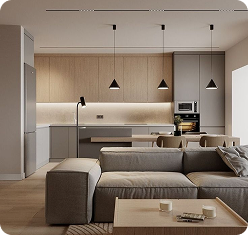
Interior Design
Interior design is an artistic and functional process aimed at enhancing the quality of interior spaces. It involves careful coordination of furniture layout, color schemes, lighting, and materials to create harmony and comfort. Interior design doesn’t just beautify a space—it brings utility, ease, and emotional warmth to those who live or work in it.
1. Understanding User Needs
An interior designer must begin by analyzing the lifestyle, tastes, and specific needs of the occupants. Every space should reflect its function while capturing the personality of its users. Without this deep understanding, a design may look nice but will lack true meaning or emotional connection.
2. Color and Material Composition
Colors and textures give personality and energy to an interior. Warm tones evoke intimacy and vibrancy, while cool tones convey calm and simplicity. Materials such as wood, metal, stone, and fabric must be balanced skillfully to create visual harmony and tactile interest.
3. Smart Lighting
Lighting plays a central role in how a space is experienced and perceived. By using both natural and artificial light strategically, a designer can alter moods, highlight features, and expand perceived space. Even in compact rooms, proper lighting adds depth and dimension.
4. Furniture Layout and Space Management
Furniture arrangement directly impacts usability, comfort, and aesthetics. A designer must make the most of the available square footage while ensuring smooth movement throughout the space. The mix of shapes and proportions in furniture adds both visual interest and functional variety.
5. Attention to Detail
Seemingly minor elements like drawer handles, cushion textures, curtain fabrics, or the arrangement of decor accessories hold great significance. These details complete the identity and aesthetic of the space and distinguish it from others. A skilled designer plans every detail deliberately, not by chance.
Conclusion
Interior design goes far beyond good looks—it's a pathway to create purposeful, inspiring, and human-centered spaces. A well-designed interior can elevate everyday experiences and express personal identity through form and function. In today's world, interior design is a fundamental necessity for better living.
